Labels

Showing posts sorted by relevance for query documentary. Sort by date Show all posts

Documentary: Research

 A Level Media Studies

Here is my research on a few docuseries for this documentary project. The first 5 minutes of documentaries 1-5 are examined. This blog post is written by me (Sharon).


Documentary 1 - American Vandal (2017) (E1)

"American Vandal" is a mockumentary, true-crime documentary conveyed through the presentation of CCTV footage, and interviews, along with images and videos from social media. This documentary narrates a school crime (vandalism) in which everyone is sure Dylan committed this crime and then creates a case to oppose the accusations against him. Audiences of the ages of 18 and above are targeted due to mature images, and perhaps, to those interested in high school narratives. A medium close-up shot is mostly used in interviews which shows their background, however, a close-up shot is utilized whenever it gets emotional - having a sensation of tying the emotions with the audience. In interviews at school, a long shot shows the number of people/teachers as judges gathering, suggesting that the school takes this crime seriously. The voiceover narration is a good help to the audience to keep us on track with the fast-paced documentary - commenting on every scene thoroughly and keeping a serious tone throughout to build the mystery. However, with the narrator's comments and constant exposure to interviews of students, teachers, and many more, the audience is likely to doubt their beliefs on 'who is the actual criminal?' This would have the audience on edge and hook them towards the narrative - longing to see what will happen next. The addition of non-diegetic sounds of cameras clicking whenever pictures of the vandals help in the exaggeration effect of the crime. Moreover, images and footage from social media are shown vertically as they are presumably taken from phones, which indicates this vandalism matter has gone viral on the internet. As these media were inserted appropriately, they were edited to become fast-paced to directly imply chaos and intensity. The central theme and message of this docuseries focus on immaturity and immature humour, such that Dylan and his friends create absurd YouTube content (e.g. nun humping).


Documentary 2 - Death to 2020 (2020)

"Death to 2020" is a deadpan mockumentary circulating on occurrences and happenings all over the globe throughout the destructive year of 2020 presented as a timeline of events. This documentary would be suitable for people ages 16-18 and above due to graphic content and language. The first day of 2020 started off with an intense wildfire in Australia shown via close-up clips and footage of the fire, which may have foreshadowed the rest of the year, with the COVID-19 pandemic being the leading occasion not long after. Some others may include Trump's impeachment trial (the US), Brexit (the UK), the Oscars, the election campaign, cancel culture, and racism, all leading to democracies. This mockumentary involves a narrator guiding the audience all and through who also adds extra information on the topic, such as personal viewpoints, or general additional details - causing the audience to be more open (minded) to external perspectives and further educated. Furthermore, a serious and robotic voice and tone of the narrator are applied as images and footage are inserted (edited to become fast-paced) throughout, perhaps to imply how severe and terrifying these incidents can be. For instance, a visual image of the world map to expose countries that have been influenced by the lockdown covered in black, panning all over at a fast pace to imply how powerful it has impacted the world. Adding on to personal outlooks, these docuseries have included all kinds of people from different backgrounds and hence, diverse experiences on each of the events, for instance, a reporter, the president, the Queen, a scientist on Covid, an average citizen, a spokesperson, professor, a mom, and a  therapist. This would assist in establishing how one single situation can have an effect on different types of people, which at the same time would entertain these audiences. These interviews are typically shot on medium shots that still give the audience a glimpse of their surroundings, however, medium close-ups are utilized whenever their dialogue gets intense, or when their tone intensifies. I would say they have dry-wit humour to portray the ridiculousness and absurdity of these matters. More camera angles are applied to demonstrate contrasts, such as long and aerial shots to expose the atmosphere when the world was still packed, along with time-lapses to reveal chaos before the COVID-19 pandemic. Whereas, a slow-moving camera with establishing shots post the COVID-19 pandemic presents a dead and quiet ambience. The directors' main message would be to educate citizens on the series of events that happened in 2020 and possibly to achieve a greater perspective and mindset on these issues, which has been highly effective on me, as the audience.


Documentary 3 - Formula 1: Drive to Survive (2019) (S1:E1)

This sports docuseries outlines the lives of  Formula 1 drivers both during and outside races, including a glimpse of their personal lives with families, which presents a heartwarming sensation to the audience. These can be concluded through interviews with drivers, mechanics, team owners and executives. I suppose the target audience is young adults to adults (18+) due to the brutal scenes, and specifically, motorsports enthusiasts. The races are represented as harsh on one side, yet thrilling, whereas the drivers are represented as courageous and emotive. I like how this series would realistically display both sides of F1 - the hardships and victories.


Documentary 4 - Making a Murderer (2018) (S1:E1)

This expository true-crime documentary can be ensured by the presence of a "criminal", lawyers, sheriffs, police, and interview footage. Young adults and adults above 18, especially crime enthusiasts would be the target audience. In this case, the sheriffs are portrayed negatively since they were the ones who got Steven Avery (the "criminal") sentenced to 18 years in prison. This docuseries perhaps needs some background on how the sheriff caught Steven, and why it was him, along with the timeline of events.


Documentary 5 - Life in a Day (2020)

This would be a poetic and observational documentary, a lifestyle documentary due to the sentimental episodes, such as birth, and parenthood. Most of the footage is handheld and taken through mobile phones as the concept is having to send a video from a certain day, which gives the documentary and the audience a realistic sensation of living each one of their lives, and going through the events with them as they are being presented. The general population above 18/25 are targeted due to mature contents. Women/mothers are represented as brave with the sight of birth footage, along with a positive representation of events, whether they be inspirational, heartwarming, hopeful, or lively. I enjoyed this docuseries as it presents how different everyone's lives are on a certain day of the year around the globe, and educates the audience on different cultures people in the videos are implementing.


Documentary 6 - Gordon Ramsay Uncharted (2021) (S1:E2)

This would be a travel documentary seen via drone shots, long shots, and establishing shots as Gordon Ramsay experiences West Sumatra's culture and cuisine. The general population is targeted in this docuseries to perhaps educate us on Indonesian culture. West Sumatra is represented positively by Ramsay's excitement and amazement at traditional dishes and their traditions. I like how it offers an authentic and accurate aspect of the location, for instance, work-life (man labour) in Sumatra and its festive culture.


Documentary 7 - Inside the Mind of a Cat (2022)


This would be an observational documentary as connotated by the appearance of a cat physiologist observing and explaining on cat's social behaviours and their species, where cats are smart and curious animals. Moreover, this documentary introduces the audience to cats' physiques, such as their elongated spine that allows them to jump - as stated - as high as cheetahs. The general population is targeted in this as some may be interested in cats' physiology and some may simply want to broaden their knowledge on the most successful animals to walk on earth. Cats, here, are represented positively as being intelligent, such that makes people want to adopt cats as home pets to train, as their behaviours are somehow unique. To add, slow motions and close-ups of cats jumping and doing trained activities are used along with voiceovers of the physiologist on their behaviours to further enhance the explanations on, for example, why they are able to leap so high. I like how this documentary offers an educational purpose to the audience and to still perceive cats positively by taking care of them, as well as training them.

Self Reflection: This research helped me and my group in achieving a gist of typical conventions in documentaries, and especially mockumentaries. It also assisted us with coming up with introducing the characters through the interviews, and what documentary type it would be (participatory - interviewer's questions appear in the final text). In addition, researching and analysing media texts (documentaries) aid our knowledge in utilising media elements, such as mise-en-scene, camera shots, angles, and movements, editing techniques, and sounds.

Documentary: Weekly Progress & Plan

 A Level Media Studies

Here's a weekly diary that tracks our progress on the film opening, including a plan/timeline we must follow. This blog is written by me (Sharon).


PLAN

This plan would be ideal for us to follow for this documentary project. Below this plan is my team and I's weekly progress.


DIARY (WEEKLY PROGRESS)

WEEK 2 (24th July 2023)

Friday, 28th August:
We were introduced to a documentary project and made a small analysis of 3 documentaries (Making a Murderer, Life in a Day, and Gordon Ramsay Uncharted).


WEEK 3 (31st July 2023)

Friday, 4th August:
As a class, we watched one episode of American Vandal and made a detailed analysis of it, however, I have to watch an episode of another documentary, a mockumentary perhaps. We created a team and my team decided on a mockumentary genre.


WEEK 4 (7th August 2023)

Friday, 11th August:
We started brainstorming several documentary ideas, such as high school dramas, friend groups, stereotypical students, etc., and identifying our target audience (likely to be 16-18 and above). We got ideas from sitcoms and movies like Friends, Modern Family, and The Breakfast Club.
Problem: We have not come upon a final idea for our documentary in this lesson
Solution: We would have to meet up and discuss in our free time
To do: Make a decision by next Wednesday


WEEK 5 (14th August 2023)

Friday, 18th August:
We discussed the screenplay, and I began on the storyboard altogether. Maxi completed the statement of intent (target audience, media language, etc.) as Timo worked on 10 possible titles for this mockumentary.
Problem: We have not decided on the flow of scenes, therefore, the storyboard cannot be completed yet
Solution: Discuss in our free time
To do: Have the screenplay and storyboard done by next Wednesday


WEEK 6 (21st August 2023)

Friday, 25th August:
I continued on the storyboard as Maxi wrote the screenplay. We discussed the overall flow of the mockumentary further. Nay was told to create the filming schedule.
Problem: Screenplay and storyboard, getting our actors to agree, confirming the filming schedule
Solution: Follow the filming schedule strictly, and finish the screenplay and storyboard as soon as possible
To do: Ask the cast members and film. Here's our filming schedule:

  • August 28-30: Film Maxi and Timo's argument scene
  • September 1, 4-7: Other Daves
  • September 8: Danny's scene (Crypto Dave)


WEEK 7 (28th August 2023)

Wednesday, 30th August:
We filmed half of a scene (the argument between Maxi and Timo), however, it was pretty time-consuming as people kept walking by, also figuring out the right angles to capture the scene.

Friday, 1st September:
Maxi managed to finish the screenplay, so hence, the storyboard has also been completed by me. Me, Nay, and Timo did trial shots in different locations for interview scenes (as the initial interview room - the Media Studies room - would be used)
Problem: Maxi (in Bangkok), and filming
Solution: Use social media (WhatsApp) to stay in contact regarding this project, and start filming next week (possibly Monday) to keep track of our filming schedule
To do: Follow the filming schedule strictly so we can finish as scheduled


WEEK 8 (4th September 2023)

Tuesday, 5th September:
Nay did the research on a typeface for the thumbnail, which we finalized on the typewriter font. As filming was supposed to start yesterday (Monday, 4th September), we didn't end up filming as our videographer (Timo) wasn't able to make it to school (he got sick). 
Problem: The filming schedule didn't go the way we planned, 2 of our teammates (Maxi and Timo) aren't at school with me (Sharon) and Nay
Solution: Use social media (WhatsApp) to stay in contact (e.g. we discussed the typeface via WhatsApp in this lesson), and start filming today to get back on track
To do: Film all scenes with actors on scheduled days

Friday, 8th September:
We finalized the typeface, as well as experimented with different spacings. Mr. Nick gave us an idea of our closing scene, where "Dave(s)" is animated (handwritten 's'), which we will end up using. We also took our group picture, however, we will retake the picture tomorrow.
Problem: One of our actors fell sick, so filming is postponed to Monday (11th September)
Solution: Push filming schedules back
To do: Get all scenes done by Monday


WEEK 9 (11th September 2023)

Tuesday, 12th September:
We filmed scenes on Not Dave (Kevin) (played by Juna) to replace Crypto Dave as he fell sick on Friday last week (scheduled filming for Crypto Dave) and must attend an interview. Therefore, to save time and to not fall way behind our filming schedule (as time must also be allocated to post-production (editing) to be done by Timo). Moreover, we gathered all 6 Daves (including 1 Not Dave) to take pictures for the thumbnail and individual photos.
Problem: We fell way behind the filming schedule, so editing must be completed within less than a week
Solution: Start editing by the time all scenes have been filmed
To do: Complete editing and blog posts before Week 10 (submission for the final documentary)

Wednesday, 13th September:
Progress on the thumbnail text "Dave(s)" using Procreate and Canva to screen record the handwriting of the "(s)." Mr Nick helped with the audio trial and error for the sound of 'marker on paper.' Besides that, we all did our own tasks in completing the blog posts. Timo (our videographer and editor) started editing yesterday, right after we finished filming all the scenes (he's 30% done).
Problem: Editing needs to be done before Week 10 (Tuesday)
Solution: Remind Timo to continue his editing
To do: Complete blog posts and remind Timo to continue the editing

Self Reflection: This detailed weekly plan with all the problems, solutions, and to-do lists throughout the timeline of this documentary project, helped my group track our progress thoroughly. It also enables us to focus on our objective better by working on the to-do list to not be left behind, and settle the problems.

Documentary: Critical Self Reflection

 A Level Media Studies

This is a critical self-reflection of my team's documentary project, 'Dave(s).' This blog post is written by me (Sharon).


In our brief, we were informed to create a 3 to 5-minute documentary opening with a sub-genre of our own choice. My group decided to do a 'mockumentary' targeting general students and/or high-schoolers (15-25 years of age; teenagers to young adults), most specifically, Gen-Zs exposed to the meme culture.


1. How do your products represent social groups or issues?

'Dave(s)' focuses on high school students with contradicting personalities, morals, attitudes, and lifestyles despite sharing the same name, Dave, We aimed to include a variety of stereotypes of each and every one of the Daves through subcultures in typical high schools nowadays. The personalities to represent include jocks, players, nerds, soft boys, introverts, athletes/a "gym rat", and outcasts (a character who is not called Dave, but instead referred to as 'Not Dave'/Kevin). One of the biggest social groups we positively represent is the LGBTQ+ community through Happy Dave. By all these stereotypes we attempt to represent and conform to, we over-exaggerate these traits and qualities to present a comedic effect to the audience for a good laugh. Here, the audience can find themselves in these Daves, such as Happy Dave (a part of the LGBTQ+ community - which is a large community in this era) as per the Uses and Gratifications Theory of personal identity. They may relate to them in certain ways, for instance, being 'accepted' for being the person they are. To add, these Daves are conveyed as either jocks and players (self-absorbed, overly confident, girl-craze, "popular"), happy (body language, cheerful always), nerds, soft boys (a calm, collected, introverted person), creepy (terrifyingly quiet, someone who sits alone in the back of a classroom, 'concealed' through the black hoodie), outcasts (they're just, there). With these conventions, Stuart Hall's Reception Theory may suggest that the audience acknowledges the directors' message in this media text (mockumentary) and perceives the way the directors deliver the messages. Such as being as kind and well-mannered as Softboy Dave, not being 'jocks' like Player Dave, and to recognize Happy Dave's positivity. The representation here is that Player Dave fails to interact with girls, the non-diegetic sound/music stops as the camera pans and zooms into Player Dave's face, indicating an awkward silence (second-hand embarrassment as the audience) out of embarrassment and humiliation. Nonetheless, this aimed to be a satirical mockumentary with a diversity of stereotypes and representations, along with personality traits, to deliver the message of - the saying - "Don't judge a book by its cover," and to embrace diversity, no matter how different you are from someone, everyone has their own place in society. This issue of not wanting to talk to, or be friends with certain people, or groups of people due to preconceptions in their heads about them, has grown in this era. So, therefore, we hope this mockumentary can help eliminate that prejudice. For example, students avoiding interactions with Creepy Dave simply because he is private and weirdly quiet does not mean he is a predator - he may be in need of friends due to his introverted manners. This mockumentary's unserious and playful nature is thoroughly for comedic and satirical effects for caricatures, this means that these stereotypes aren't all negative all along.


3. How do your products engage with the audience?

This mockumentary demographically targets teenagers to young adults, students and/or high-schoolers of ages 15-25. One way that helps us psychographically reach them would be through stereotypes of typical students in high schools that we have included in our documentary. According to the Uses and Gratifications theory of personal identity, audiences of this mockumentary may see themselves in the Daves/one of the Daves through the subcultures within a high school including jocks, players, nerds, soft boys, creepy, happy, athletes; one way to engage with the audience. Such that those who are highly confident (in terms of being "capable" of pulling/attracting girls), egotistical, friendly, and a so-called "player" in typical high schools, may see themselves in Player Dave. Barthes' cultural code plays a role in targeting the general population too, that being through the viral Internet meme of the "Josh Fight" (2021) in which anyone named Josh could participate in the fight to decide who gets to keep the name 'Josh'. As a matter of fact, that meme has become our blueprint/where we got the general idea for this mockumentary. This means that those Gen-Zs (or more or less teenagers to young adults) who have seen this meme could understand the reference that we have made in this mockumentary (Dave(s)), which enables us to get them hooked and interested. Moreover, this is due to that technology revolves around everyone nowadays (it has become a daily routine/factor), enabling the spread of news (e.g. the "Josh Fight" meme) easily. The contradicting personalities and attitudes of these high-schoolers are purposely over-exaggerated by us to illustrate the comedic effects, stupidity, and absurdity of these characters to showcase a satirical, mockery, and to make it implicitly funny. For example, featuring Levi Strauss' binary opposites, Player Dave gets rejected by every girl he hits on despite the fact that he is overly confident (narcissistic). The binary opposites here describe how Player Dave believes and exhibits the image of being a "player" but in an actual manner, is not (due to the rejections shown on the montage). 'Dave(s)' is also a participatory documentary that interacts/engages with the audience by including the interviewer's off-screen questions in the final product, and even during Player Dave's montage where he interacts with the camera/the audience to look at his act of attempting to talk to girls. This could make the audience feel a part of the documentary, a part of the journey, as well as being a student in that high school.


4. How did your research inform your products and the way they use or challenge conventions?

Starting this project, I have researched several mockumentaries, such as Cunk on Earth, and American Vandal - which inspired the flow of 'Dave(s)' most, we can conclude through Steve Neale's genre theory - that these conventions set audiences' expectations - that mockumentaries conform to typical conventions of breaking the fourth wall, directing interviews, hand-held camera shots, a natural look, satire, and caricatured stereotypes. Therefore, we conformed to the blueprint of mockumentaries, such as including interviews with all 6 Daves, with each interview explicitly showing their contradicting personalities. Another one would be through the over-exaggeration of stereotypes, for example, Happy Dave represents the LGBTQ+ community positively via being overly 'expressive,' is always cheerful, wears a pink sweater, and frequently uses body language/moves their body a lot. This is demonstrated through the low camera angles that convey Happy Dave's positive character, to be centralized, and to show the body language better. To further extend the comedic and satirical effects in this mockumentary, the usage of montages of Player Dave failing miserably in talking to girls and high school students calling 'Not Dave'/Kevin as Dave, Creepy Dave's unexpected improvised action on coming closer to the camera to 'scare' the audience away - but hilarious in a way -, and Happy Dave's expressive mockery comment ("He's not that muscly") on Muscle Dave's muscle flex. These montages are shot in a hand-held manner to add comedic aspects, which conforms to typical conventions of mockumentaries, perhaps to heighten the intensity and chaos, such that 'Not Kevin' gets gradually annoyed as people call him 'Dave,' as well as Player Dave's intensity in failing. 'Not Dave''s annoyance can be seen through the camera lenses being out of focus constantly as the handheld movement gets shakier. Nonetheless, long shots are used in Player Dave's montages to establish a bigger picture of the school environment and to wholly present their acts, whereas medium/medium close-up shots are used in 'Not Dave''s montages to capture his expression of annoyance better. Overall, with the colour tone of this mockumentary, we went with the natural settings from the camera to conform to mockumentaries' conventions of being lifelike and realistic (no significant/many edits in the colour scheme/tone) - can be seen from The Office which the colour tone seems so natural to the audience. Moreover, with research on thumbnails of documentaries, one of them being Keeping Up With the Kardashians, we have conformed to these conventions of giving a gist of the leading characters through the thumbnail. Therefore, we have developed our thumbnail with all 6 Daves standing in a line in a medium shot, each showing their characters via facial expressions and body gestures, with an edited title written "Dave(s)" right above.

Documentary: Quick Cut (Further Research)

 A Level Media Studies

Here is my further research for the documentary project regarding 'quick cuts', along with me and Nayana's short clip on quick cuts.

Quick cut is a film editing technique that refers to several consecutive shots of brief duration. It can be used to convey a lot of information very quickly or to imply either energy or chaos. Quick cuts are also frequently used to bring to attention the non-verbal actions of the character. For further research of my team and my documentary project, as a class, we explored a new editing technique (quick cuts) that can be applied in our documentary. We watched a few movie clips with quick cuts and therefore, produced our own clip. Below is an example:

Below is me and Nay's quick cuts clip:

Self Reflection: I chose to direct a short clip of a student requiring a teacher's signature for their paperwork on a group project. This 'boring' task is made to become more energetic and enthusiastic via the number of zoom-ins, whip pan, and smash zooms edited with quick cuts. I first started exerting my idea onto a storyboard (as shown below) to give a general idea to my partner (Nayana) and to ease filming (time-wise). I greatly enjoyed this project as it allowed us to exhibit new filming/videography techniques, and I like how the camera goes shaky as the subject runs to further show the 'hurry'. Nayana was the one who edited the video via an application, CapCut. However, I suppose the music I chose can be more 'dramatic', in a way, to convey the 'rush'. This editing technique would be nice to include in our mockumentary, adding subtle humour and chaos to it.

Documentary: Team

 A Level Media Studies

Here's an introduction to my team for this documentary project. This blog is written by me (Sharon).

The team we have formed for this documentary project consists of me (Sharon), Nayana, Maxi and Timo. I believe we would be able to achieve our pursuits and help in developing the product throughout the process from beginning to end. Nayana is highly creative as a person, such as in pitching in ideas, which would be great for developing concepts in this project (the creation of a film opening). Maxi is a diligent person, mostly in teamwork, along with having a strong willingness for responsibilities and putting in the effort. Lastly, Timo has talent in videography - filming and editing - this is a substantial advantage in this film-opening project as filming and editing are the most influential for this project to be constructed.


Links to blogs:

Nayana - https://nayanamediastudies.blogspot.com/
Maxi - https://mpbgmedia.blogspot.com/
Timo - https://timothysulaeman.blogspot.com/

Documentary: Development

 A Level Media Studies

Here includes the list of possible titles for our mockumentary, the storyboard, typeface research, actors/characters (cast), and locations. This blog is written by me (Sharon).


Titles

  • On the Daves
  • Finding the Best Dave
  • Dave War
  • Hunger Daves
  • Daves
  • Dave
  • Dave Club
  • The Dave Fight
  • Diggin Dave
  • Dave(s)
Self Reflection: These titles suggest that there are several Daves and some indicate that these Daves would have to compete with one another. The title we settled on is 'Dave(s),' by which the '(s)' proposes the idea of the crew members realizing that after all, these chosen students are all named Dave.


Characters' Names
  • Muscle Dave/Dave Aardvark - played by Hanly - a black compression shirt with the school's uniform as outerwear
  • Player Dave (originally Athlete Dave) - played by Davin - a varsity jacket
  • Creepy Dave (originally Quiet Dave) - played by Baron - a black hoodie
  • Crypto Dave (replaced with 'Not Dave'/Kevin) - played by Danny - nerdy glasses
  • Softboy Dave - played by Taka - earbuds, and a cardigan
  • Happy Dave - played by Jowey - a pink sweater
  • 'Not Dave'/Kevin - played by Juna - normal school uniform
The name 'Athlete Dave' is changed to Player Dave as Athlete Dave would be too similar to Muscle Dave - they're both into sports/athletics. So, we modified the athlete to a player, showing a personality trait of being overly confident (in terms of pulling/attracting any girl at school). With now 'Creepy Dave,' as it was originally 'Quiet Dave,' we presumed 'quiet' would be too bland and boring, whereas a 'creepy' trait is easier for us to improvise on, such as staring and coming forward towards the camera, as well as our actor (Baron) portrays 'Creepy Dave' better than 'Quiet Dave.' The removal of Crypto Dave was due to the fact that our actor (Danny) couldn't be here on his designated filming schedule and the days after that, so we replaced 'Crypto Dave' with 'Not Dave'/Kevin (played by Juna), to not fall way behind on filming and editing schedules. Although it was a last-minute change, we believe 'Not Dave' is a great improvisation to invigorate the plot further since my team members could develop this idea in a short period of time.

As written, those are the things each and every one of the Daves would wear, which conforms to their stereotypes. For example, a black hoodie worn by Creepy Dave connotates that he is quiet up until the point it becomes terrifying to those around him, the type who would sit in the corner/at the back of every class, a private person, and 'weird' in a way. Moreover, all Daves would still wear the school's uniform to inform the audience that they are still high schoolers (all are stereotypical of high school students).

Self Reflection: As a group, I enjoyed discussing the stereotypes of each of the Daves, as well as the features that could represent their specific groups, such as a black hoodie for Creepy Dave to enhance that he is private, the type to sit alone at the back/corner of a classroom, and terrifyingly quiet. Besides all that, we also discussed the actors that would suit the role best. This conversation helps us with efficient planning and decision-making so we can start filming quicker due to the limited time, especially with editing as we require feedbacks from our teacher (Mr Nick) days before the due date.


Typeface Research & Development

This research on typeface would be for the title screen made by Nayana.
Link to: Dave Fonts

Above is the research and experiments we did on the typeface, including spacings, and capitalizations. We generally decided on a typewriter-like font to convey and impose the idea of a 'mock seriousness' which aligns well with our sub-genre, a mockumentary. Additionally, with our research on typefaces, we came across a sitcom-mockumentary called 'The Office' that also applies the typewriter font.

Moreover, we finalized with "Lumios Typewriter New" which we then experimented on the spacings and capitalizations.

As a team, we settled on the last one (the 4th picture) as it looks neater than the rest with the same amount of spacing within each of the letters. All capitalized letters (the 2nd picture) seem very demanding for a satire mockumentary show, and the other 2 are simply on the uneven spacings between the letters.


Above is what our teacher (Mr Nick) suggested - replacing the '(s)' with it being handwritten in red. This further conveys the genuine 'shock' and realization of the crew members that the chosen students are all named 'Dave.' 

Self Reflection: We chose the colour red with a marker-like brush to connotate that it is indeed a sudden and impromptu change due to the last-minute realization of our crew members. The '(s)' is written by Nayana on her iPad using the drawing software, Procreate. She then screen-recorded the handwriting process throughout, to be edited by Timo. Additionally, we experimented with a black background, however, it didn't turn out to look as well as a white background. The white background gives a cleaner, tidier, and brighter look (a more positive general outlook to this mockumentary) that can captivate the audience's eyes better. This is, therefore, our final (opening) title screen, as well as our thumbnail.


Storyboard

The storyboard below was done by me (Sharon) a few weeks before the first draft was finalized and before we started filming (where we improvised a lot), so therefore, some scenes may not correspond to both screenplays (original and updated), and the final edited documentary.


Self Reflection: The storyboard here was simply to put our ideas into drawings that would help us get the gist of how the documentary would be, and know what to improvise/develop on, or what to keep. Here, I was informed to draw a basic (not detailed) screenplay due to the limited time. Since we improvised much after the storyboard was done, we did not quite put the storyboard into significant use during filming (not depending/fixating wholly on the flow of the storyboard as better ideas came by the time of filming).


Thumbnail


These are all the possible thumbnail ideas that me and my team members sketched. 

Self Reflection: We finalized on the top right with all Daves standing in a line presenting body postures and facial expressions that correspond to their characters to give the audience a gist on each of their personality traits, simply through the thumbnail. This could perhaps hook their interest in consuming this media as they may think that they can relate to them/one of the Daves as seen from the thumbnail. Other thumbnails (shown) are merely the word 'Dave,' which I believe is not enough to grab the audience's interest as much as the one we settled on since they may not understand the concept just via the thumbnail. I personally sketched the bottom left idea as I suppose it could portray the Daves well individually, however, the top right would be simpler to organize and capture.


Below are Timo's experiments on the thumbnails with a variety of styles.
Link to: Dave Thumbnail


Here is our final thumbnail made and edited by Nayana.


Self Reflection: I personally agree with this decision on finalizing the thumbnail due to it looks the most natural to me, whereas those with white or black backgrounds, black and white images, and purple outlines seem "cheap" and disorganised to begin with. Here, I like the visibility of the shadows that illustrates a lifelike and realistic look. The positioning of the title "Dave(s)" looks best here as it gives a bit of spacing with the actors (a tidier image). Moreover, the Netflix symbol on the top left indicates that this mockumentary will be showcased and distributed through Netflix, as well as, for us to get a bigger picture (a gist) on how it would look like edited into Netflix's thumbnails.

Documentary: Brief

 A Level Media Studies

Here is the brief on the documentary project. This blog is written by me (Sharon).

Documentary: Screenplay

 A Level Media Studies

Here is our mockumentary's screenplay which was written by Maxi. This blog post was made by me (Sharon).


Original Screenplay

Below is the original screenplay written by Maxi (first and original draft)


Improvised Screenplay

Below is the updated screenplay written (by Maxi) and edited both during and after filming sessions. Therefore, this screenplay includes developments, such as characters, lines, and emotions. The significant improvement here is that we removed one of the Daves (Crypto Dave) as he couldn't be in school on the day of his scheduled filming day (Friday, Week 8), on Monday and Tuesday (Week 9). In addition to that, the final documentary is due on Tuesday Week 10. Hence, my team and I compromised on finding a solution - introducing a 'Not Dave' character filmed on Tuesday - so that we stay caught up on filming as editing will take a while. Other improvements include lines that sounded unnatural with the actors, so we suggested each and every one of the actors/Daves rephrase the lines from the original screenplay in order to make it sound like them (the Daves).

Self Reflection: Developing this last-minute idea was thankfully easy for my group as ideas came up really quickly on improvisations, especially during filming. This eases filming due to the time limit (we were way behind in filming) and makes filming so efficient (filming did not take much of our time). One of them would be the bathroom scene interaction of 'Not Dave' with a high school student.

Here is the main part of the screenplay that we changed (taken from Maxi's development blog post):

NOT DAVE
I'm not even called Dave man, my real names Kevin. People just grouped me in with them cuz I was a new student.
CUT TO:
INT. SCHOOL BUILDING - DAY
MONTAGE of NOT DAVE (Kevin) being called Dave and approached by other students.
--Kevin is sitting down on his phone as students come up to him and ask him if he's the new kid, Dave.
--While at his locker, students pass by him as they shout, "Hey Dave!".
--While at the urinal, another students takes the one next to him, looks towards Kevin and nonchalantly says "Hey Dave".
--While walking in the hallway, Kevin gets approached and hugged by another student who says "Hey Dave! Nice to meet you man!".
--Kevin then screams, "MY NAMES KEVIN!!".
MONTAGE END

Postmodernism Essay

 A Level Media Studies


Analyse the key characteristics of postmodern media. [15]

Postmodernism is believed to be a rejection of modernism. It is the saturation of culture through mass production to the extent that we can no longer differentiate between reality and representation (hyperreality). The aim of post-modernism in films and TV would be to subvert the mainstream conventions of narrative structure and characterization and to rest the audience's suspension of disbelief. Its core value is to celebrate imitation and mimicry. In this essay, I will be explaining postmodernism's key characteristics attached along with appropriate case studies.

A media text that is greatly postmodern is the 2022 release of a Disney+ show, SheHulk, which includes features and characteristics such as parody, self-reflexivity, and satire. Firstly, the use of parody (a 'mockery') in SheHulk's season finale (episode 9) is presented through the reference to Marvel's Executive Producer, Kevin Feige, as SheHulk fights the "K.E.V.I.N." robot purposely named after Kevin Feige himself. Naming the machine after him could be to pay respect for his media production work. This particular information raises Barthes' narrative codes of cultural code which requires audiences' prior knowledge of Marvel and their executive producer in order to understand the "K.E.V.I.N." robot. As the audience acknowledges this, it could interest them further through the sense of humour to provide a good-natured comedy. Secondly, self-reflexivity is displayed by SheHulk herself "breaking the 4th wall" explicitly in ways of interacting with the audience, "Is this what you guys want?" and quite literally breaking the 4th wall. We were exposed to SheHulk forcefully exiting out of her show from Netflix's home page to the Marvel/Disney studio lot and straight into SheHulk's writers' room, or the "real" world. Self-reflexivity, such as breaking the 4th wall, subverts to typical superhero films. This utilisation can further hook audiences' interests since it shifts their expectations of this superhero film and will proceed to watch to expect the unexpected. Lastly, SheHulk also utilized the postmodern feature of satire that being copying/imitating something targeted to a larger group of people. In this case, SheHulk made a commentary and/or critique on how all Marvel movies have a blueprint of implementing the same plot and ending, which is eventually boring and dull - where the story and ending are heavily predictable and expected by the audience. This critique by SheHulk was really unexpected as the show SheHulk itself is a Marvel Universe production. However, as superhero films normally end with the hero winning, SheHulk still conforms to this even after the critique made towards typical superhero films' endings.

The truth in media texts has become difficult to distinguish due to postmodernism, as supported by Jean Baudrillard's idea of reality and hyper-reality. Baudrillard's idea of hyperreality states that we're surrounded by representations of reality (simulations) and that we can no longer distinguish between simulation and reality. Additionally, Baudrillard's idea on reality: heightened reality and hyperreality (simulation), believed that we are still able to tell apart the truth (has a strong link with reality). Whereas, hyper-reality has little to no link to reality but is packaged as real, meaning that there are artificial copies filled with simulacra (attempts to seem real) - it is difficult to differentiate as they are often packaged in the same way. One post-modern media text that is considered as heightened reality would be the 2020 release of a documentary, "David Attenborough: A Life on Our Planet". Here, it presents the impact of the destruction of humanity, and/or war. David himself was first shown wandering around an abandoned, destructed house/shelter, where we can still presume that that location was the inevitable impact of the war. To add, a time-lapse shot of scenery in the wild, a falling tree, predators hunting their prey in the wildlife, and close-ups of small animals are generated to be genuine, and are clearly seen to be actual. Moreover, artificial effects may also be present, such as narration (voice-overs), editing, and non-diegetic music, where it is still easily distinguishable from the certainty of reality. On the other hand, one of the heavily postmodern shows and/or documentaries that are considered hyper-reality would be "Keeping Up With the Kardashians". One of the very few true events that we can still distinguish could be their runway, fashion events (e.g. New York Fashion Week), nightlife, and the sets (e.g. their houses). Elements that make it difficult to tell apart reality include scripted scenes and events, such as pranks done among friends and/or family, and hence, scripted emotions and reactions. This effect may have on the audience that we prefer hyper-reality over reality (it may become more entertaining to us rather than heightened realistic documentary (David Attenborough's - as previously mentioned), possibly due to the reason that we are in denial of the truth. However, hyper-reality will eventually create unrealistic standards in media, thus applicable to our daily lives. For instance, the Kardashians portray a certain image and/or encourage a certain ideology of themselves in the media, such as "the perfect face". This will inevitably add to unrealistic beauty standards. All these raise one of the many possible critiques of postmodernism, where the audience may need to and is required to be media literate to define and/or distinguish between reality. In the case of the Kardashians, the audience must acknowledge the fact that the Kardashians' lives aren't everything that has been exposed to the audience.

Documentary: Final

A Level Media Studies

Below features the final product of our mockumentary, Dave(s).
Note: provided in an embedded YouTube video, along with a Google Drive link in case the YouTube video does not work. This blog post is written by me (Sharon).


Dave(s) - Google Drive

Documentary: Statement of Intent

 A Level Media Studies

Here justifies the statement of intent on our mockumentary, 'Dave(s).' This blog post is written by me (Sharon).

Our mockumentary, 'Dave(s),' concentrates on 6 high-schoolers who unintentionally share the same name, Dave. Therefore, a competition is to be set up on who deserves to claim/keep the name 'Dave.' This idea was inspired by the trending "Josh Fight" Twitter meme, where anyone named Josh was told to meet at specific coordinates to 'fight,' and whoever won got to keep their name (Josh) and everyone else had to change their name. As all Daves show diversity and variety in their personalities, attitudes, and interests, we conform to stereotypes and representations of different groups (of people) in a typical high school. For instance, a few include, Happy Dave represents the LGBTQ+ community, Player Dave represents a classic jock, and Muscle Dave represents a "gym rat." Through all these features, this mockumentary is able to build a comedic effect on the audience via the juxtaposition of how regardless of having the same name, they are all assorted in terms of personalities. This could assist in enlarging the target audience, mainly psychographically. Our demographic, however, is still fixated on those ages 15-25 (teenagers to young adults) who are avid users of social media (e.g. Twitter, Instagram, TikTok), and are knowledgeable of Gen-Z's rapidly evolving "meme culture."

With this mockumentary, we seek to experiment on and hence, include comedic and satirical effects that are implicitly funny, such that via each and every one of the Daves' 'absurd' behaviours during interviews or even the montages that illustrate their stupidity/humiliation. Through the interviews, the audience would be able to see how each of them live their high school lives, for example, by the interactions with other students, or how students interact with them.

As Gen-Z are technologically literate, we suppose it's best for this mockumentary to be distributed and showcased on YouTube, and/or Netflix. These streaming platforms are easy and simple to control/use for Gen-Zs, as well as those platforms can help distribute/recommend our mockumentary to other audiences (for example, through algorithms, and appropriately suggesting to other users' pages) that may also enjoy this product. Additionally, these platforms can ease giving reviews, posting comments, and most importantly, sharing (to other users, or other social media, e.g. Instagram, TikTok, Twitter). Therefore, audiences are able to build social relationships, as theorized by Blumler and Katz, via interactions with other users through these features available.

Self Reflection: This statement of intent helped my group by giving a sense of direction, guidance, and a plan throughout the time given for the production of this mockumentary, Dave(s). Such that the objective of making it to be implicitly funny via comedic/satirical effects, assists us with the screenplay (comedic lines - both implicitly and explicitly), camera angles during filming to further exaggerate and enhance the comedy, and the editing techniques as well as (diegetic/non-diegetic) sounds to be included (e.g. montages).

Documentary: Target Audience

 A Level Media Studies

Here explains and describes the target audience for our mockumentary, Dave(s). This blog post is written by me (Sharon).

The target audience for this mockumentary, 'Dave(s),' is catered towards people aged 15-25 (teenagers to young adults), mainly high-schoolers, Gen-Zs, and Asians as our concept conforms to typical stereotypes of high-school students played by Asians. As for the psychographics, many of those people can relate to these 6 Daves in terms of the diversity of personalities and traits, attitudes, morals, lifestyles, and perceptions. Such that some are egotistical, some play basketball, some are nerds, some are terrifyingly quiet, and some are timid. For instance, those who go to the gym may see themselves as 'Muscle Dave' since he is written as being a "gym rat"/"gym bro," who flexes their muscles everywhere and anywhere with no shame and is self-absorbed in a way. The opening to this mockumentary will feature individual interviews with each of the Daves to give the audience a general introduction to their contradicting personalities. Moreover, the target audience can relate to their strengths and weaknesses.

Gen-Zs being our primary targeted audience, technology, specifically social media, such as Instagram, TikTok, and/or Twitter has become a daily factor/routine in their lives. This eases the spread of the most recent news, for instance, our idea for this mockumentary lies on the viral meme of the "Josh Fight" on Twitter, where teenagers to young adults would definitely be up to date towards meme culture. Therefore, showcasing this media text to streaming services like YouTube, or Netflix would be highly beneficial in targeting Gen-Z, as they are likely to also share this content to social media platforms (e.g. commentating, sharing this media text to their friends, etc.).

Self Reflection: This is the first time I have targeted a target audience so specifically, such as Gen-Z as well as those that can relate to these characters' strengths, weaknesses, and personality traits, especially with a great number of stereotypes and representations of each of the Daves. This helped with our final text because it would assist us with the casting, location choices, and language/content (what teenagers say on a daily basis to their friends). As for the casting, we can therefore cast those of similar ages and are high schoolers as they can also help in improvising the lines (from an external point of view that we as a team may not have thought about). This helps my team with efficient use of time as we can simply cast our friends (not from external sources), allowing us to schedule filming more flexibly and easily. The locations, too, ease filming and targeting high schoolers as it takes place within the high school that illustrates a typical high school environment.

Documentary: Post Production

 A Level Media Studies

Here shows the editing process for our mockumentary, 'Dave(s)' done by Timo. This blog is written by Timo.

To begin, I chose the timeline-based and non-linear video editing software application that is Adobe Premiere Pro CC 2020 as my primary choice of software for video editing. To begin, most of the files were transferred from the SD card used to my desktop to begin editing. 

The files were then imported into Premiere Pro, I then filtered the shots and deleted all the shots from the media library that I thought wouldn't be useful in the overall edit. The editing software made it easier to sync clips as it has the marking feature which allows the user to mark a certain part in the timeline with a label.

Shown below is the overall timeline of the project.  


SIGNIFICANT EDITING CHOICES AND METHODS

Exposure Control (Color Grading)

By adjusting the exposure and the shadows, the originally overexposed video now fits all the other shots used in the edit.

Before

After

Typewriter Animation

By using the linear wipe effect as well as overlaying a white video and playing with the scales, I successfully created a typewriter-like effect to showcase the interview questions.


By using keyframes, I was able to adjust the timing of the animation to provide the viewers with enough time to read the text without the segment lasting too long or too short.


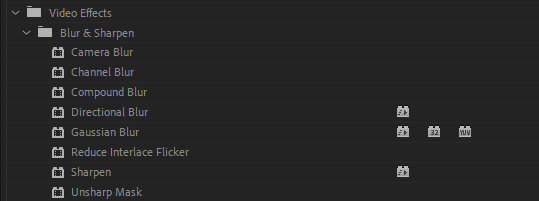
These segments used the camera blur effect, which was done to pull the audience's focus so that they don't get distracted from the text.

blur effects available on Premiere Pro


Scribble Animation

By screen recording drawing the S on a drawing application. I used this footage to chromake the greenscreen to replicate a scribble animation.


Final Product

Self Reflection: These features in the editing software used help with enhancing the quality and make editing more time-efficient, such as giving a blur effect wouldn't take too much of his time. In addition, these features enable him to experiment with the editing styles and video quality to see which would look best to the audience's eyes.